From hand-operated pipe tools to portable power drives, the original Toledo Pipe Threading Machine Company helped equip generations of plumbers and pipe fitters. Its story connects the Toledo, Toledo-Beaver, and Curtis-Toledo names found on surviving tools today.
The original Toledo company
The company’s beginnings are generally traced to 1902 in Toledo, Ohio. The Toledo-Lucas County Public Library lists a 1952 company booklet titled 50 Years of Leadership, supporting that history. Early patents also connect inventor William Vosper with the company’s pipe-threading equipment.
By 1920, Toledo was advertising portable power drives that operated its pipe tools in the shop and on the job. One advertisement showed equipment at work on the new Bunte Candy Company building in Chicago.
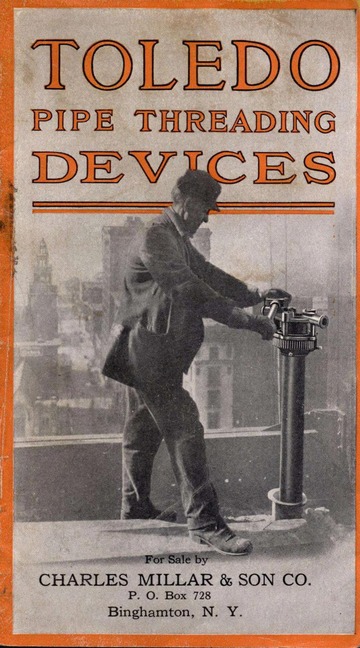
An early Toledo Pipe Threading Devices cover, bearing the name of distributor Charles Millar & Son Co.
A December 1922 advertisement also described Toledo equipment used by plumbing and heating contractors on Chicago’s Wrigley Building—a glimpse of the company’s tools on a landmark construction project.
From Toledo to Toledo-Beaver
Toledo’s range grew to include ratchet threaders, pipe cutters, vises, power drives, and complete machines for cutting, threading, and reaming pipe. A 1932 catalog placed its main office and factory at 1425–1445 Summit Street in Toledo.
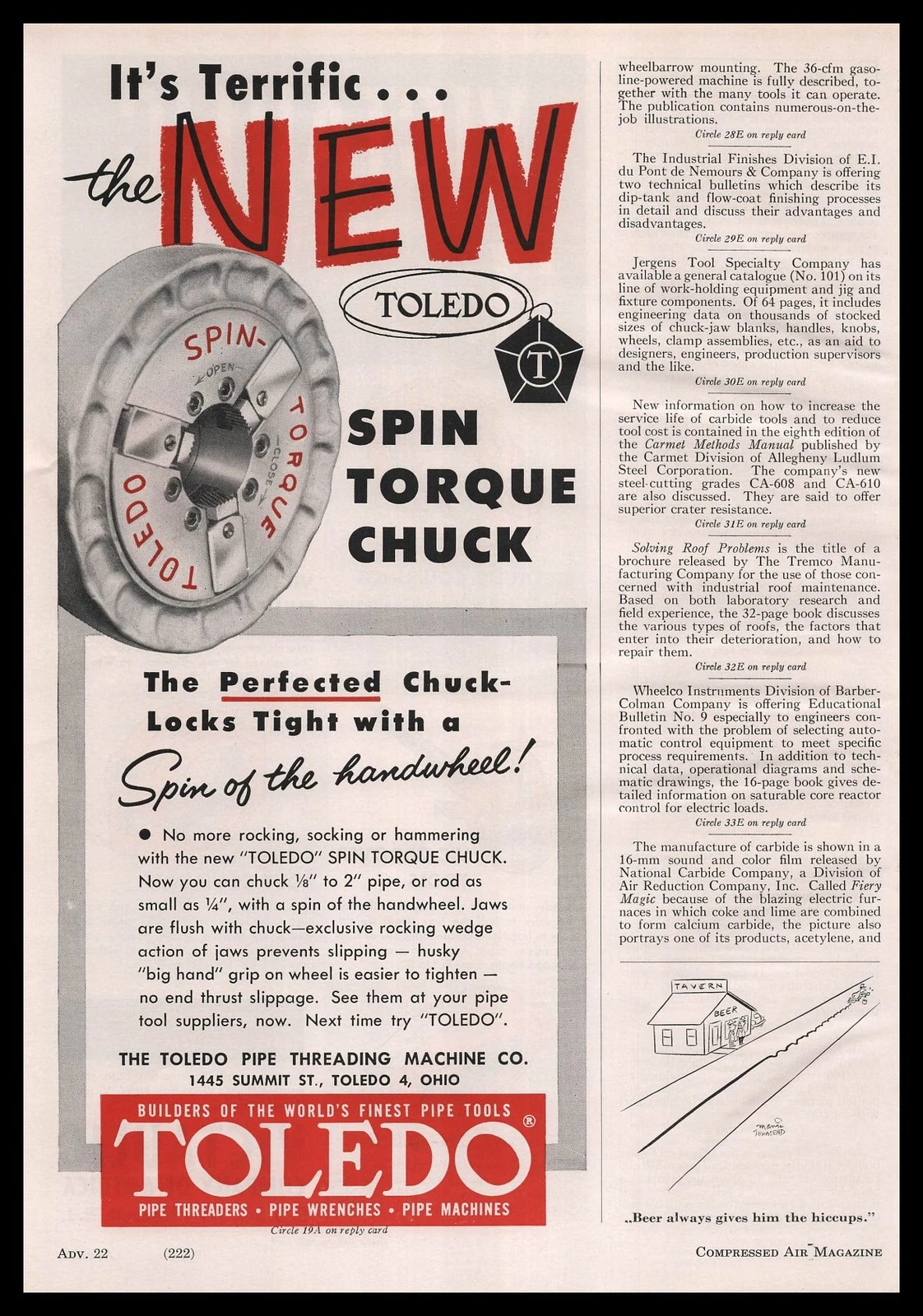
A period advertisement for the Toledo Spin Torque Chuck.
The Beaver name had its own roots in Warren, Ohio. A 1920 trade-journal report celebrated the Borden Company’s twentieth anniversary and described its Beaver threading tools.
Around 1962, Toledo acquired Beaver Pipe Tools, bringing the lines together as Toledo-Beaver Tools. Surviving catalogs identify Toledo-Beaver as a Wyle company.
The combined range included familiar machines such as the No. 999, No. 1-2-4, 720 Speed-O-Matic, and Speed King 727. The No. 999-B was designed to accept Beaver Mono, Duo, and Quadra die heads, allowing owners to continue using that tooling.
The Curtis-Toledo years
The business later became associated with Curtis Manufacturing and the Curtis-Toledo name. FS-Curtis’s company history records the transfer of Toledo manufacturing to St. Louis in 1976, followed by the Curtis-Toledo era.
The later Curtis business joined Fusheng in 2005. The history of its air-compressor business should not be taken as evidence of continued support for the old pipe-threading machines.
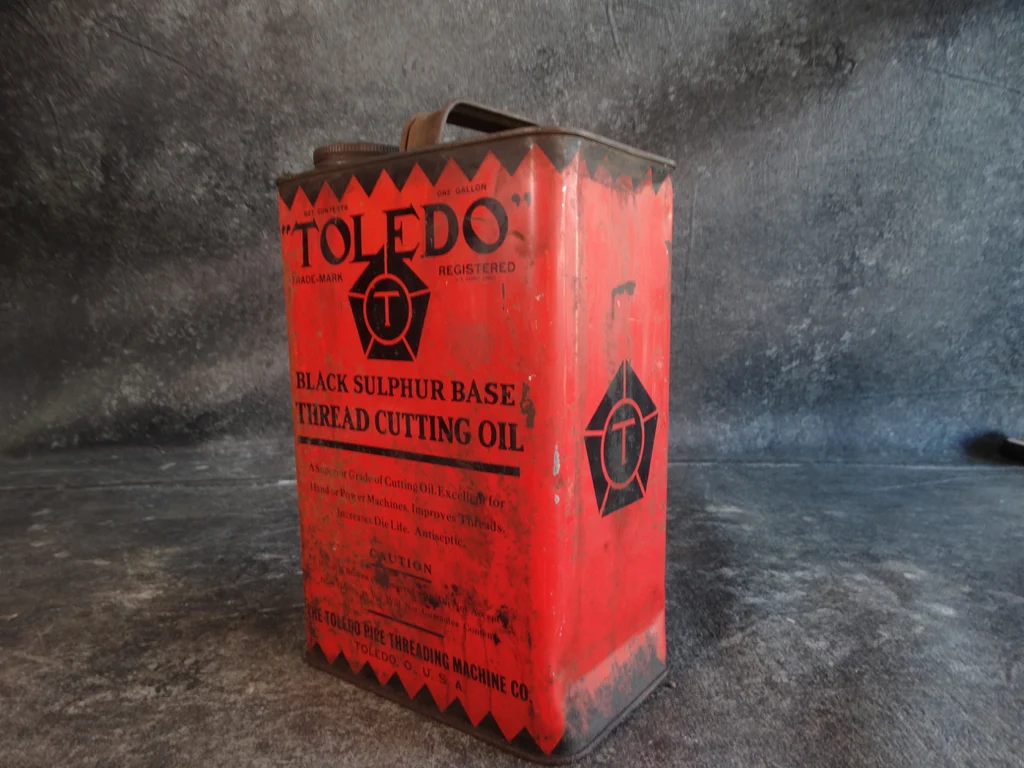
Original Toledo branding on a vintage thread-cutting oil can.
This page documents the original manufacturer and its later names. It should not be read as a claim that Toledo Tools is the original company or its successor.
Help for owners of vintage Toledo equipment
Looking for replacement parts or dies?
Original replacement parts and dies for these legacy Toledo pipe-threading tools and machines are no longer manufactured. Whether you want to keep your original setup or move to newer tooling, here are the options to consider.
Keeping it original: searching for used parts
If you want to stay with your old-school Toledo equipment, eBay, Craigslist, and Facebook Marketplace are places to look for used parts, die heads, or a donor machine.
Buying vintage tooling can be a “shot in the dark.” Many listings are used, untested, or sold as-is. A part may look complete but have worn dies, damage, missing components, or other problems that leave it unable to work properly. Even unused old stock needs to be checked for condition and fit.
Before buying, compare the model, part number, size, and mounting details with your equipment. Ask for close-up photos of the cutting edges and working parts, whether the item has been tested, and what return options the seller offers.
Replace only the size you need
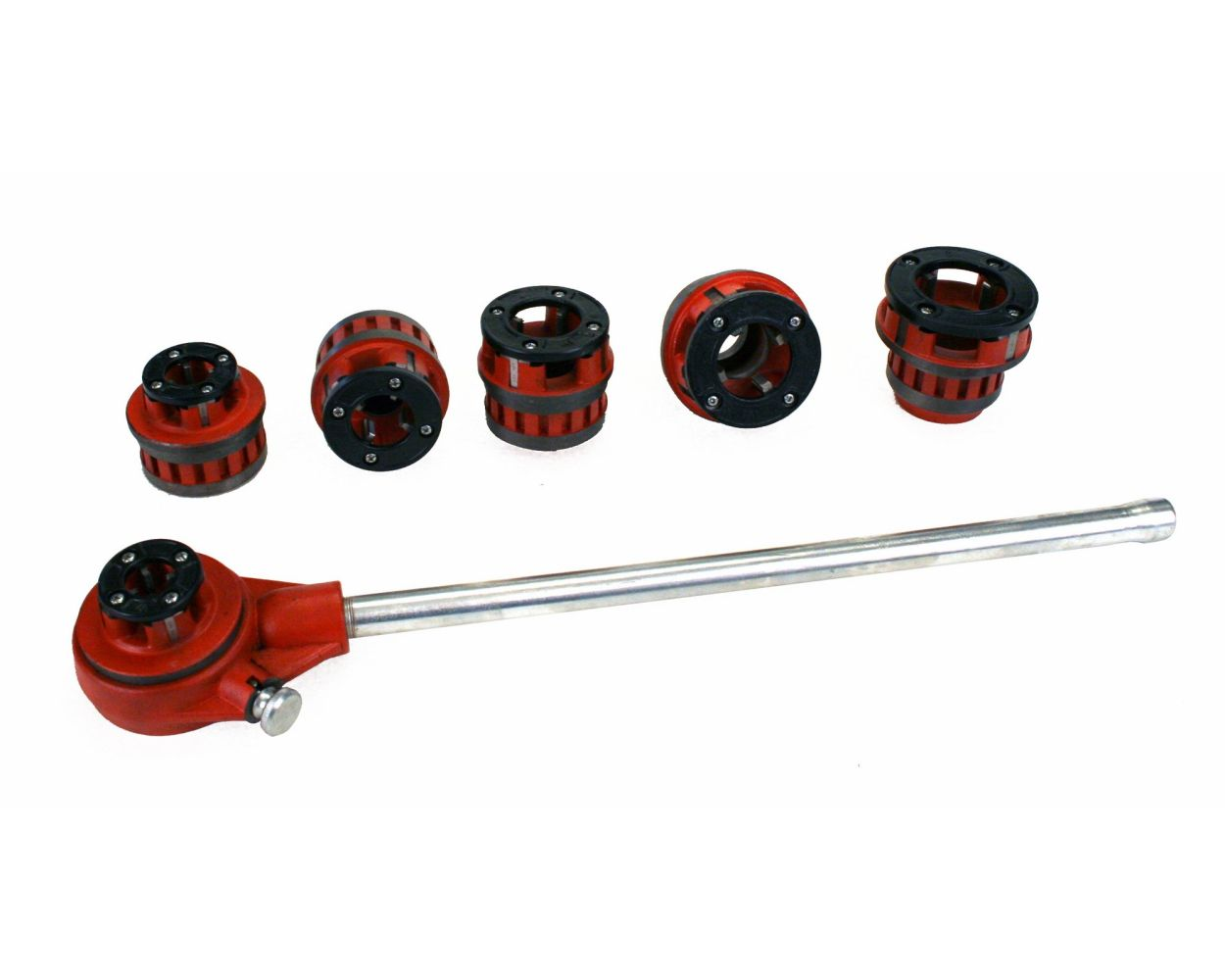
If most of your hand-ratcheting set is still in good condition, you may not need to replace everything at once. Keep using the good heads and replace the worn-out size with a new head and a matching ratchet handle.
Your original Toledo handle generally will not fit the newer head style. Plan on a compatible handle for the new head rather than assuming your old one will work.
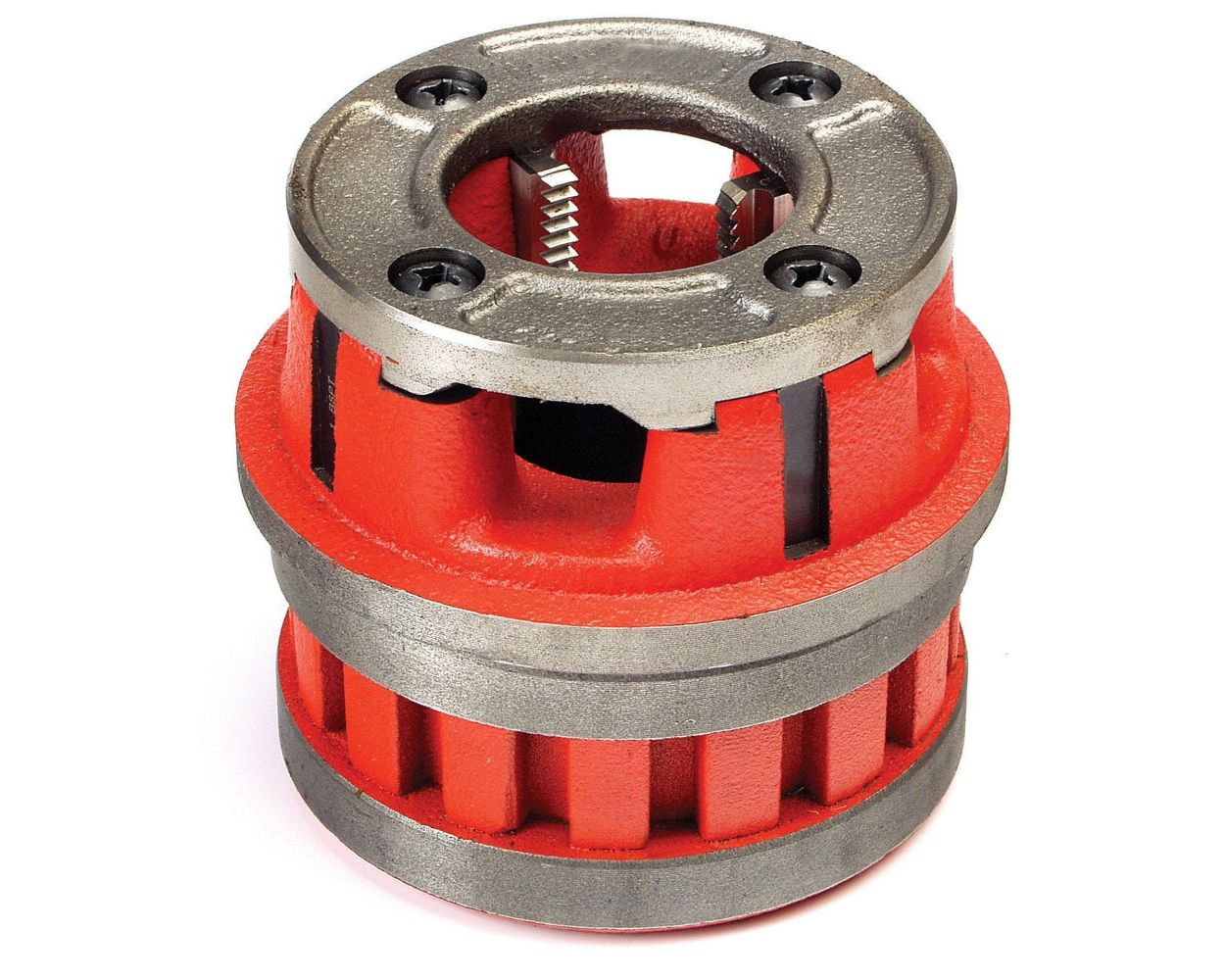
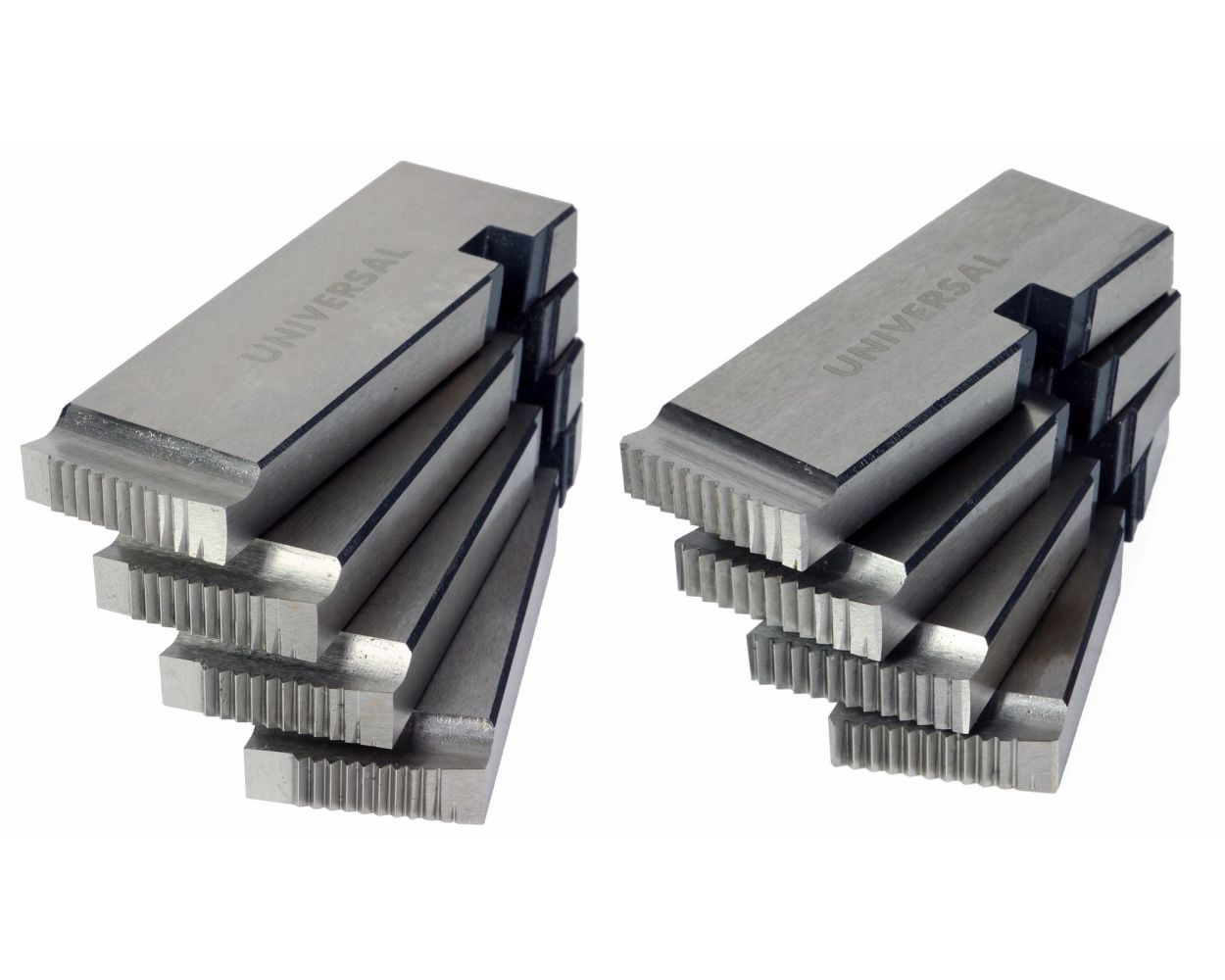
Our 12R-style heads accept the corresponding RIDGID® 12R replacement dies. Match the head series, pipe size, and thread specification when selecting dies; they are not interchangeable with every RIDGID die type.
If several sizes are worn out—or you want to start fresh—a complete kit can be the more economical choice.
Replacing heads one at a time over the years generally costs more than buying them together as a kit. Individual heads let you spread out the expense, while a kit gives you a matched setup in one purchase.
That is why we offer complete hand-threading kits. Compare the included head sizes, dies, and handle with the work you do before choosing a set.
What about a Toledo No. 999 or a similar power machine?
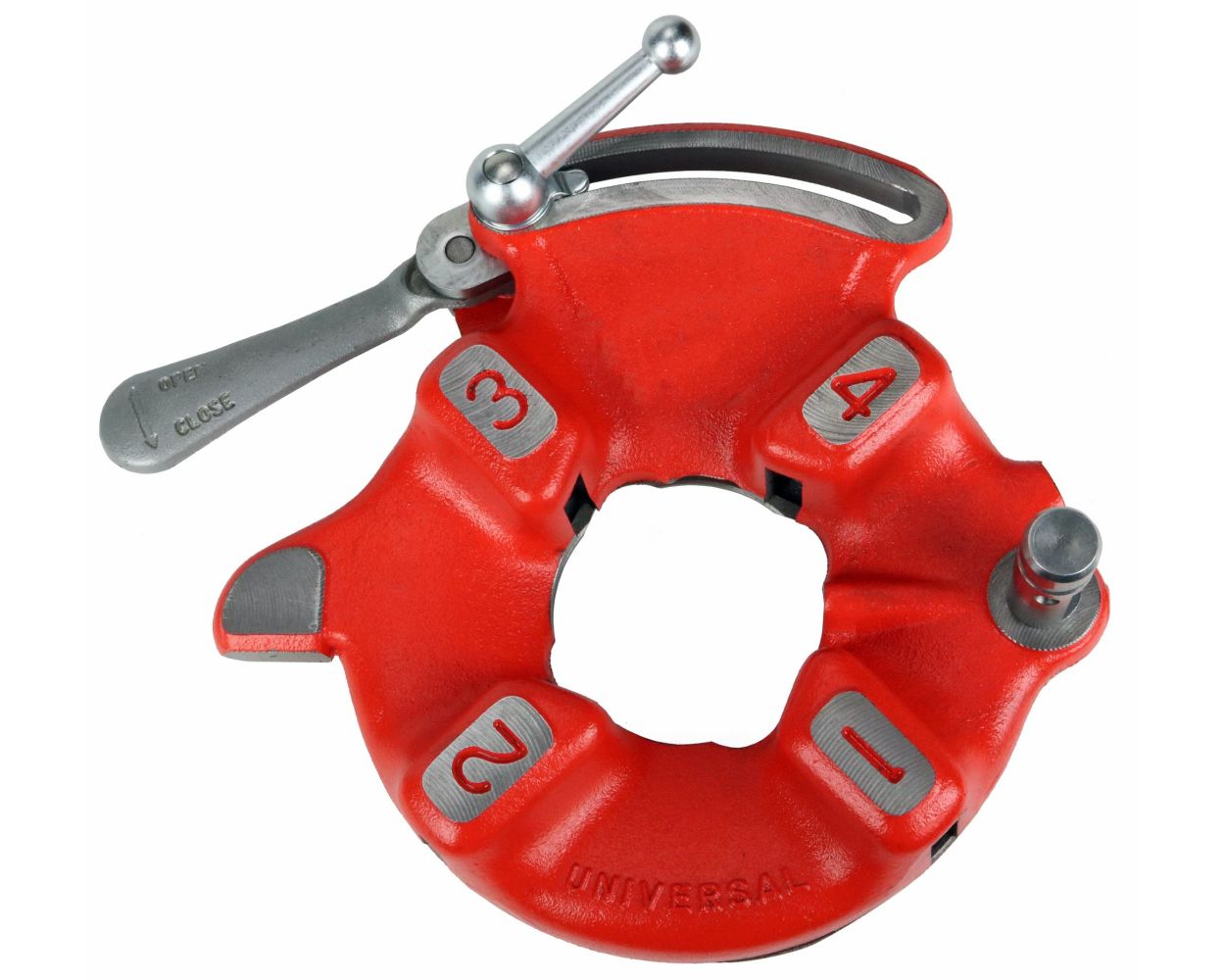
Some of our customers have adapted a newer machine die head to an older Toledo machine by fabricating a mount or modifying the existing carriage. With a suitable head, this can provide a way to use currently available dies of the corresponding type used in RIDGID machines.
This is a custom fabrication project, not a bolt-on replacement. It depends on the particular machine, die head, and the person doing the work. A qualified machinist or repair professional needs to assess alignment, secure mounting, carriage travel, clearance, and safe operation before the modified machine is used.
The hand-ratcheting heads linked above are not being offered as a direct replacement for a No. 999 machine head. Do not order a head for a conversion on appearance alone.
Start with the details: send us your machine model, clear photos of the existing head and carriage, and the pipe sizes you thread. We can help identify the specifications of the products we sell so you and your fabricator can evaluate an option; we cannot guarantee a custom conversion will fit or work.
These documents are archival references. Prices, addresses, ordering instructions, and parts listings are historical and do not represent current offers or availability.
Domestic Engineering, September 18, 1920, p. 601 (Borden anniversary), and September 25, 1920, p. 28 (Toledo power drives); The Plumbers’ Trade Journal, December 15, 1922 (Wrigley Building advertisement).
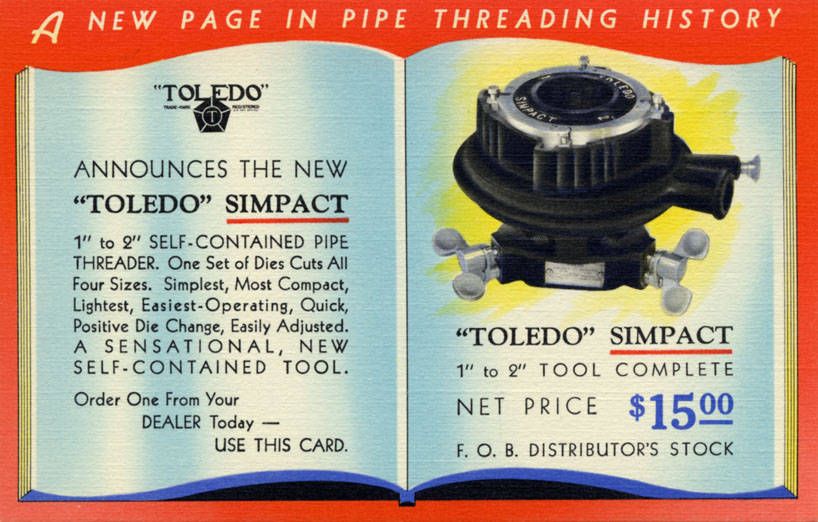
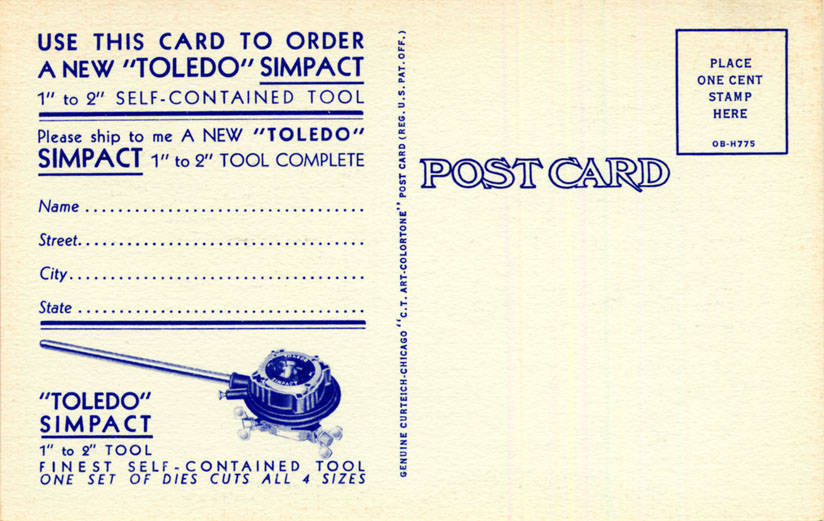
Original Toledo No. 999 repair-parts list, effective November 25, 1957; Toledo Simpact postcard, undated.
More from the Toledo archives
Original tools, packaging, and advertising from the collection. Select any image to view it full size. Advertised prices and offers are historical.
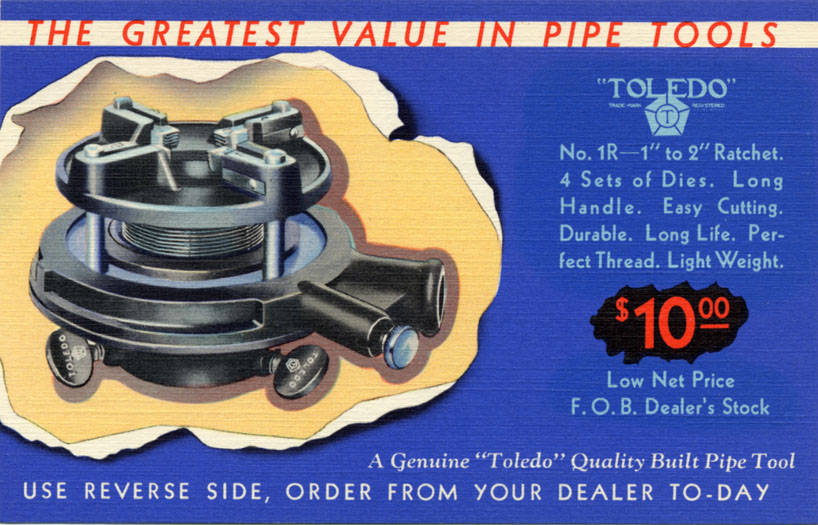
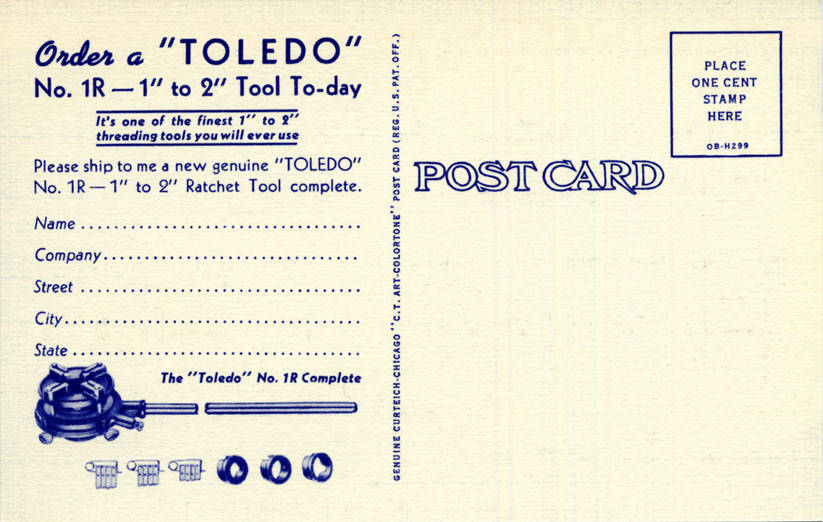
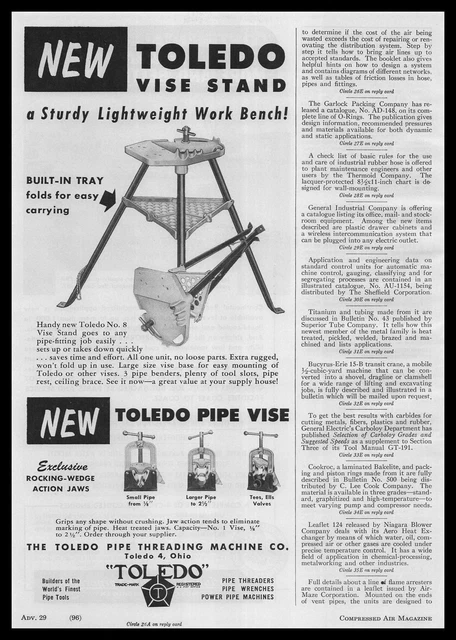
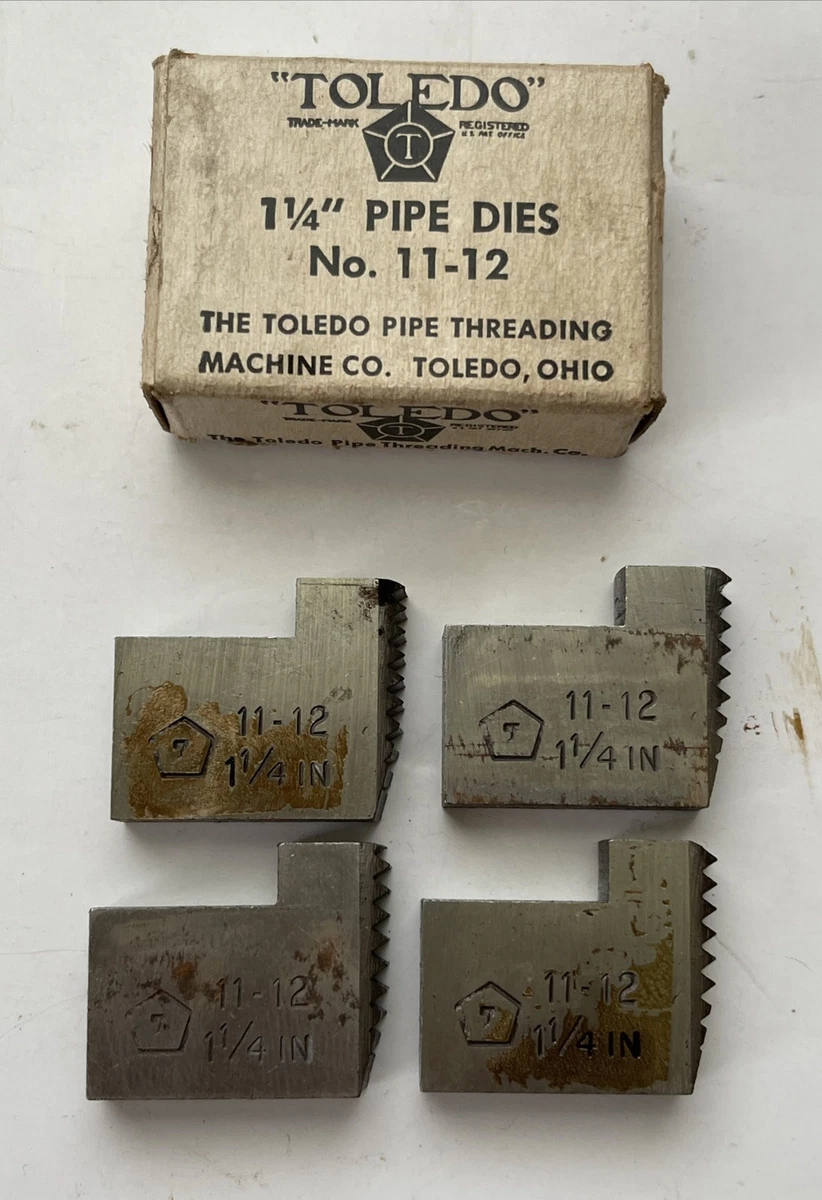
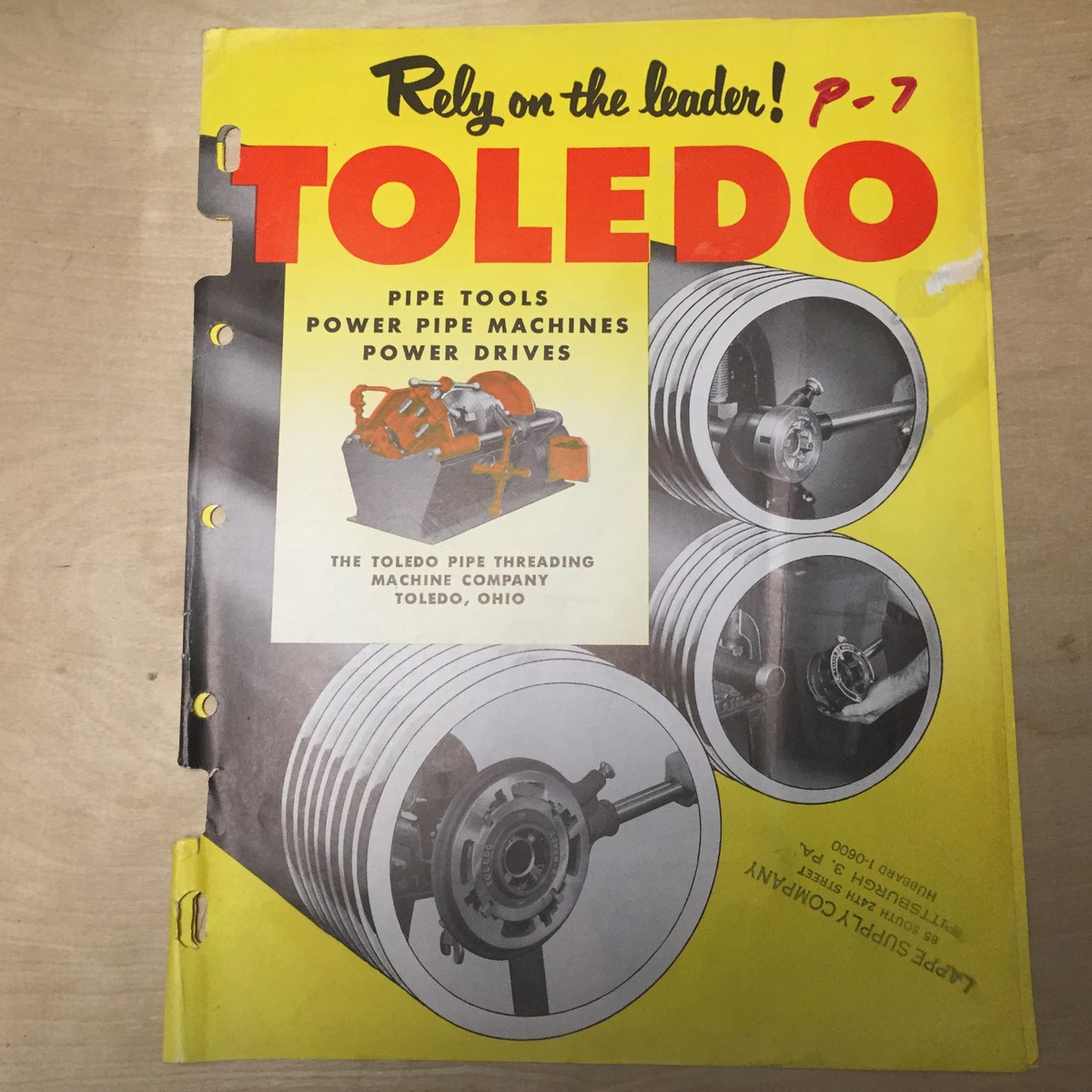
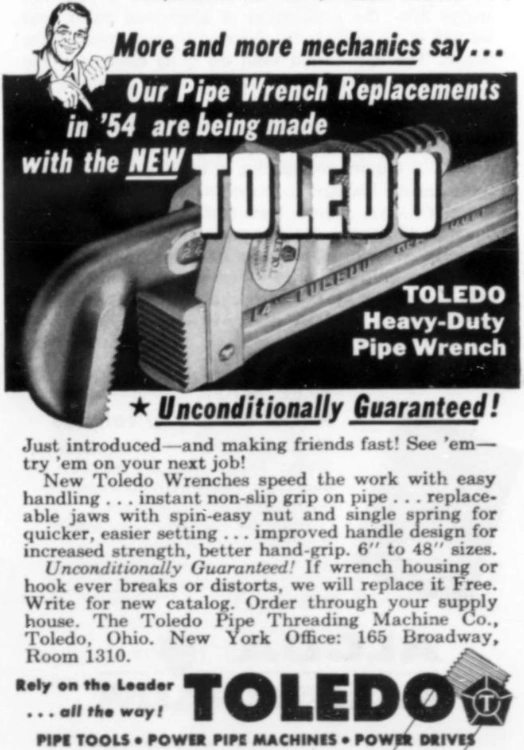
Vintage Toledo hand-threading tools.Toledo No. 1R ratchet-tool advertising postcard.Reverse of the Toledo No. 1R postcard.Toledo Simpact advertising postcard.Reverse of the Toledo Simpact postcard.Period Toledo vise-stand and pipe-vise advertisement.Toledo No. 12 head pipe dies and original packaging.Vintage Toledo power-drive literature.Period Toledo advertisement for brass-pipe dies.Period Toledo heavy-duty pipe-wrench advertisement.

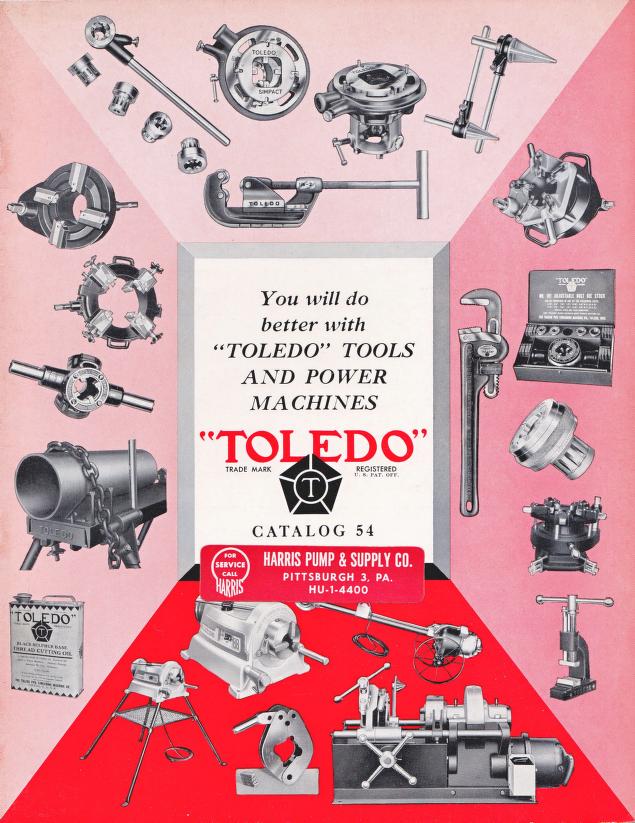 Toledo Catalog 54
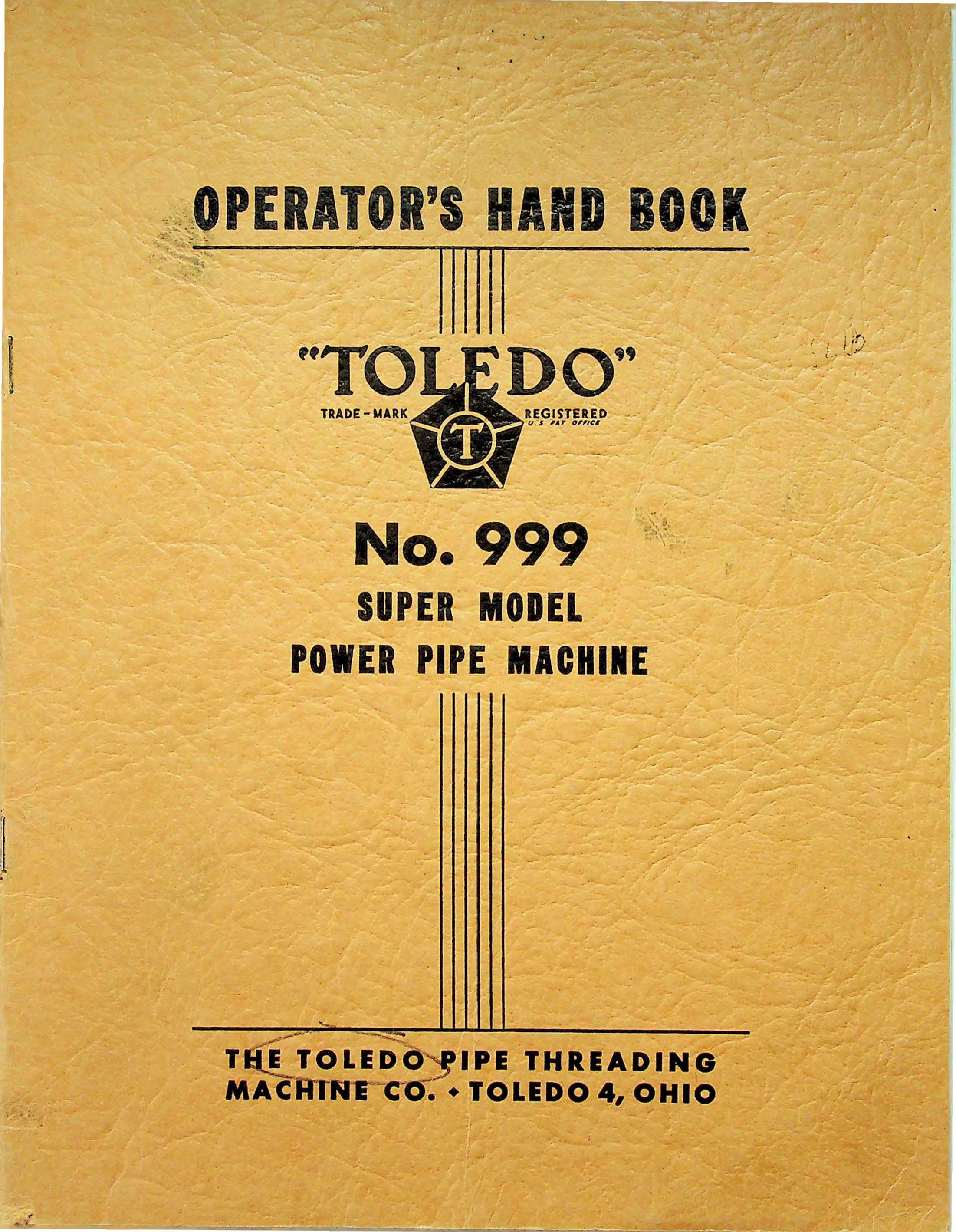 No. 999 Operator’s Handbook
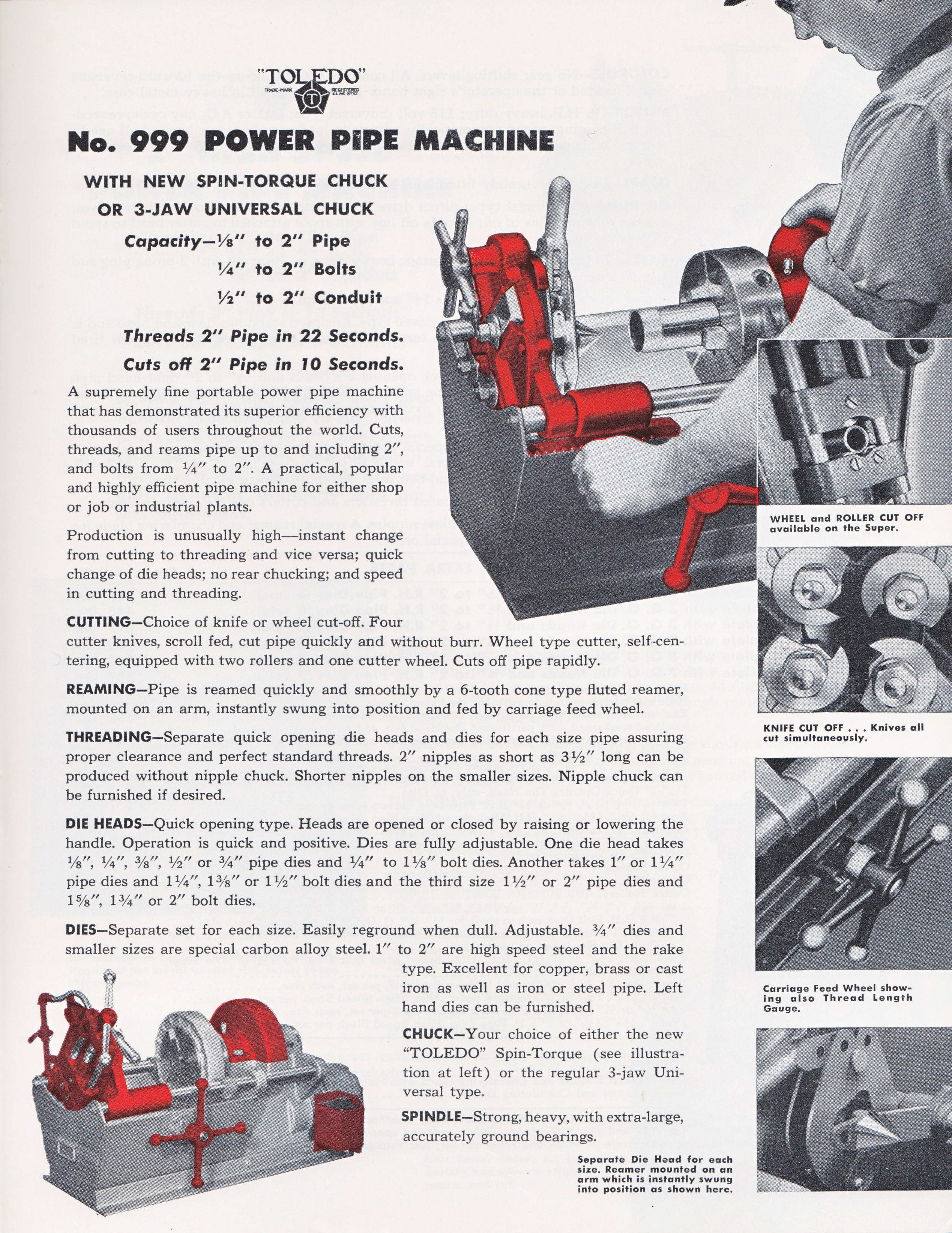 No. 999 Repair Parts List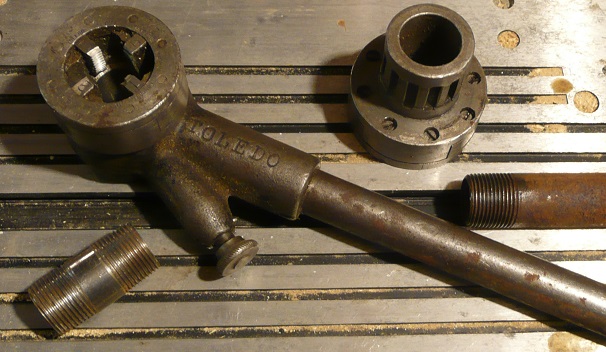

Sign In
Create New Account